

Industry Context: The Pressing Need for Equipment Scale-Up
As new-energy powder production — including lithium-battery cathode and anode materials, recycled powders, and high-performance functional powders — advances toward larger scale, continuous operation, and intelligent manufacturing, conventional small and medium-sized spray drying systems are reaching their limits. Under ten-thousand-ton-level annual capacity, traditional units can only meet demand through parallel deployment of multiple machines. This approach brings a cascade of drawbacks: excessive equipment count, complex piping networks, larger footprint, higher energy consumption, elevated operation and maintenance (O&M) costs, and difficulties in maintaining batch-to-batch product consistency.
Single-machine scale-up has therefore become an inevitable industry trend. The sector now demands equipment that delivers high throughput, low energy consumption, fewer machines, intelligent control, and stable product quality — especially the process specifications required for lithium-battery black mass and high-tap-density cathode precursor powders.
Technical Approach: From Multi-Unit Stacks to Single Large-Capacity Towers
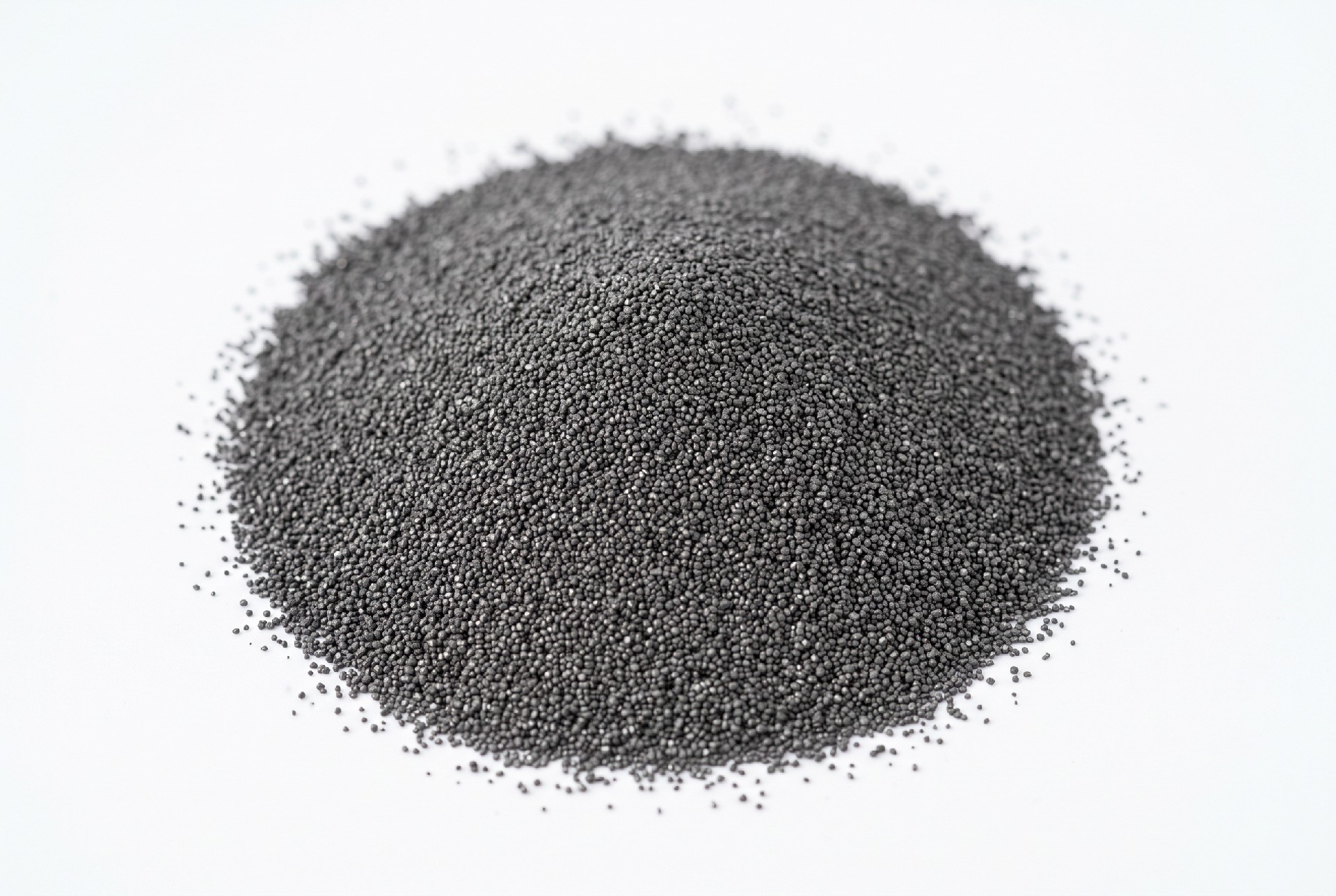
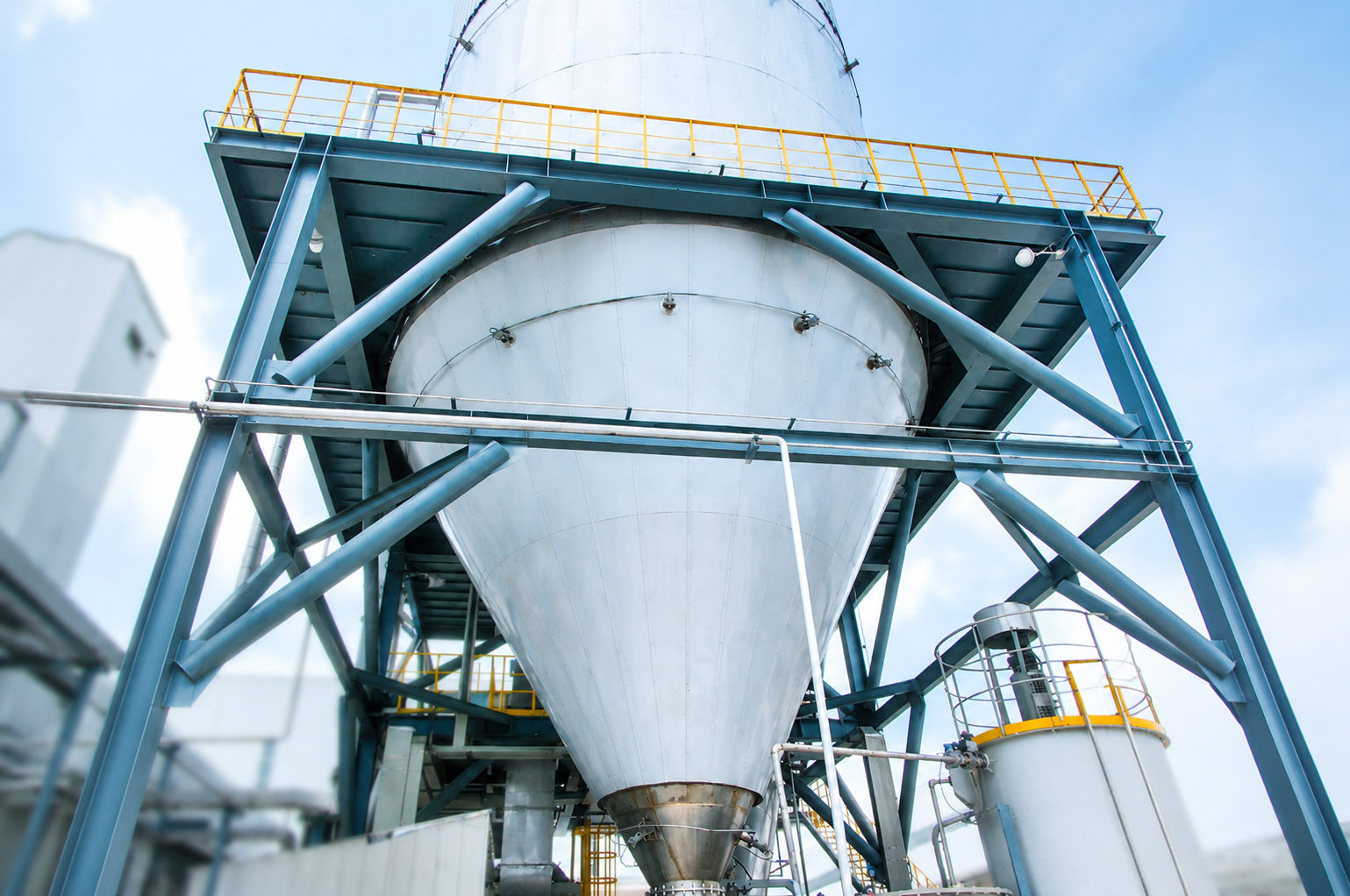
Equipment scale-up is not simply a matter of enlarging dimensions; it is a complete, high-end engineering solution. Compared with conventional multi-tower configurations, a single large-capacity tower offers a more compact footprint, streamlined piping, centralized maintenance points, stronger economies of scale, and lower energy consumption. It eliminates the compounding disadvantages of multi-machine parallel operation while optimizing both capital expenditure and production cost.
Three Core Technologies
1. Large-Diameter Tower Structure DesignFull-domain structural strength simulation and analysis ensure reliable operation under heavy continuous loads. The solution also overcomes the engineering challenges of ultra-large vessel fabrication, welding deformation control, and on-site assembly, guaranteeing precision and durability at scale.
2. Precise In-Tower Flow-Field ControlOptimized hot-air distribution prevents localized overheating or insufficient drying, while precisely regulated powder residence time preserves particle morphology. This significantly improves the yield of high-tap-density powder products.
3. Integrated High-Efficiency Energy-Saving SystemsHot-air circulation combined with waste-heat recovery substantially improves thermal utilization. Intelligent control systems adjust process parameters on demand, and reduced auxiliary equipment lowers both O&M burden and energy losses.
Engineering Delivery Advantages
As an ultra-large non-standard piece of equipment, this tower presents considerable challenges in transportation, lifting, assembly, and commissioning. Through standardized manufacturing and modular design, Jiangsu Xinpu Drying has compressed the delivery cycle for a ten-thousand-ton-level production line's spray drying tower from the industry-standard 6–12 months down to 4–5 months — without compromising manufacturing, installation, or commissioning quality — helping customers bring production online faster.
Application Value
A single tower supports ten-thousand-ton-level or higher production lines, well suited to the large-scale capacity expansion of high-tap-density new-energy powders such as lithium-battery cathodes and precursors.
Replacing multiple machines with a single tower simplifies line layout and reduces O&M management complexity.
At equivalent capacity, it lowers total investment in equipment procurement, plant construction, and supporting systems.
Industry Outlook
New-energy powder drying equipment is evolving along four directions: larger scale, greater intelligence, higher energy efficiency, and deeper integration. The 18-meter-class spray drying tower exemplifies this industry-wide scale-up, combining four core capabilities — large-scale structure design, flow-field control, precision manufacturing, and system integration — to empower lithium-battery material producers to build low-cost, intelligent production lines and support the high-quality development of the new-energy industry.